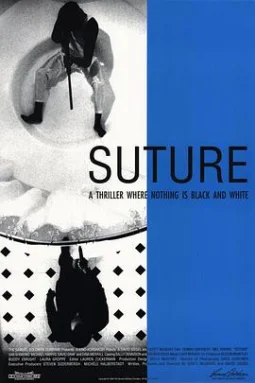
剧情介绍
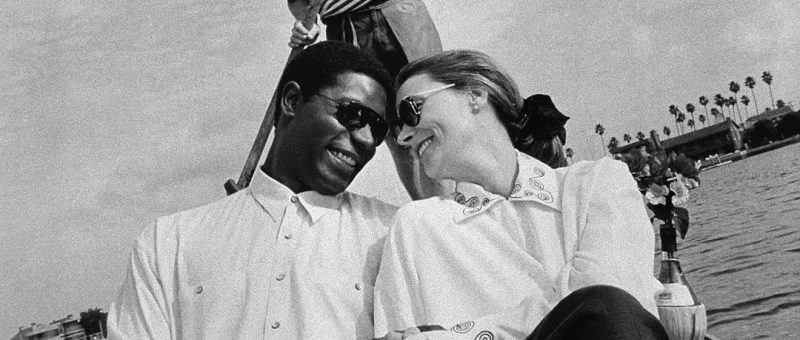
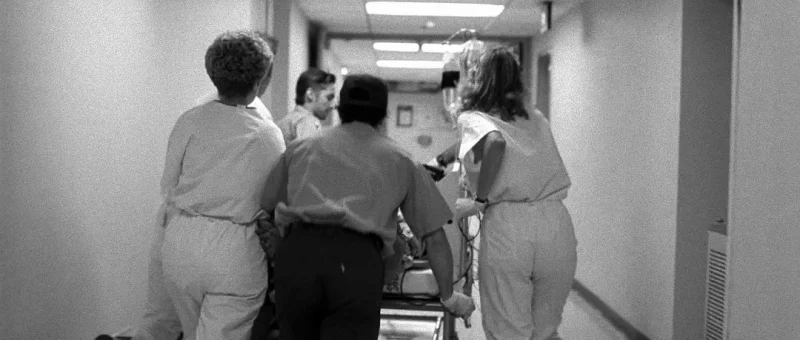
在父亲的葬礼上,同父异母的两兄弟——富裕的文森与贫困的克里首次相遇,他们注意到彼此容貌相似。克里憧憬着生活即将摆脱贫困,却不知文森正策划用汽车炸弹杀害他,意图独占父亲遗产后远走高飞。然而克里在爆炸中侥幸生还,并在医院治疗过程中逐步恢复了容貌、记忆与真实身份。这段经历揭示了两人之间错综复杂的联系与隐藏的谜团。
拍摄制作 · · · · · · 全部 >
该片是1993年出品的美国独立剧情惊悚片,由斯科特·迈克吉与大卫·西格尔联合执导,史蒂芬·索德柏格参与制片,总片长96分钟。
上映信息 · · · · · · 全部 >
1993年9月14日在多伦多电影节首映,1994年3月18日在美国正式上映。
获奖情况 · · · · · · 全部 >
- 获奖 圣丹斯电影节 最佳摄影-美国剧情片 / 获奖者:Greg Gardiner
- 提名 葡萄牙幻想电影节 最佳电影 / 《天魔无缝》
- 提名 独立精神奖 两项提名 / 《天魔无缝》
编辑评论推荐
这是一部风格冷峻的独立惊悚作品,以身份置换的悬疑框架探讨阶级与自我认同议题,极简叙事搭配精准的摄影调度,获得圣丹斯电影节最佳摄影肯定,被影评人称赞为具有作者表达气质的黑色小品,不过也有评论认为影片节奏...展开
观众评价推荐
观众对该片的悬疑设定和视觉质感评价较高,认为反转设计精巧,在低成本前提下完成了引人深思的身份谜题,不过也有普通观众觉得影片过于文艺晦涩,情节推进偏慢,整体更适合喜欢文艺悬疑的小众观众欣赏。
细节控老张2026-07-04
摄影确实顶,圣丹斯最佳摄影名不虚传,光影和构图都很有想法。但逻辑硬伤啊:汽车炸弹爆炸后男主还能走能跑,另外身份互换的动机有点弱。节奏太拖,不过氛围感不错。
This is a curious little film. "Little", because that is the kind of movie it seems to aim to be. The plot is tightly wound like a David Mamet film; likewise the manifes...+
The debut feature of US filmmaker-duo Scott McGehee and David Siegel is a pristine-looking psychological forensics of an individual's confused identity, shot in widescreen bl...+
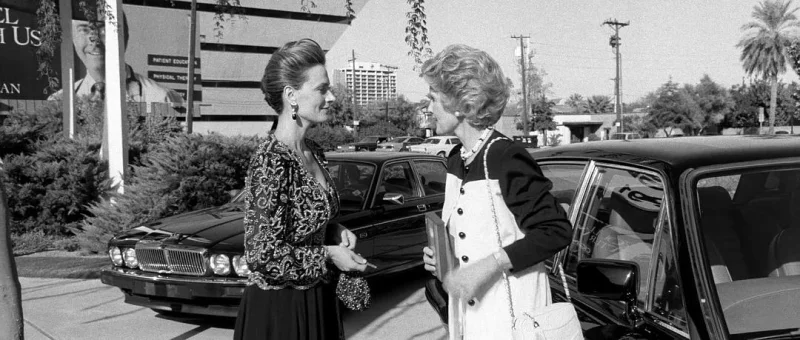
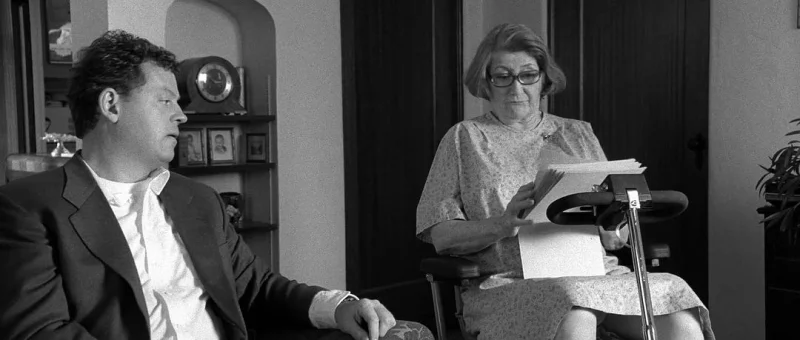
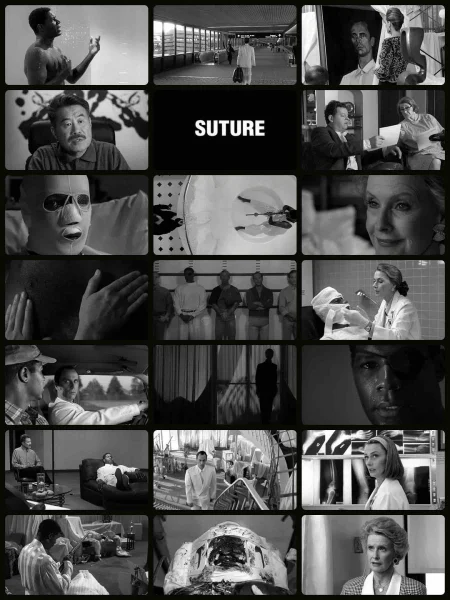 The debut feature of US filmmaker-duo Scott McGehee and David Siegel is a pristine-looking psychological forensics of an individual's confused identity, shot in widescreen black-and-white cinematography, SUTURE has its unmissable neo-noir panache awash but also undeniably undercut by its slight story-telling stratagem.McGehee-Siegel’s conceit is surprising and madcap, the purportedlyidentical half-brothers Vincent Towers (a dour-looking Harris) and Clay Arling (Haysbert) arediametrically different in their appearances (the racial distinction strikes as a self-aware but caustic jape), which at once impels viewers to suspend our disbelief and blatantly dissociates its scenario from any pretension of realism, as if to declare in its opening: don’t trust what you've seen.Truly, what we see is a rather simple identity-swapping scheme goes amiss, after murdering his minted father, Vincent plots to liquidate Clay, his doppelgänger half-brother, whose existence is conveniently sealed from the outside, thus Clay would be the whipping boy passing off as Vincent, guilty and perished, then the real Vincent can return as Clay to claim his munificent inheritance. The plan is seamless a priori, but miraculously Clay survives the car comb and ends up with a disfigured visage and severe amnesia. Treated by Dr. Renee Descartes (Harris) to reconstruct his face, now believing he is Vincent, Clay’s memory has to take a longer divagation to recover his true identity under the psychoanalysis of Dr. Max Shinoda (Shimono), who is welded together with the image ofRorschach test and passes wisdom in shrink's parlance by rote, and it goes without saying, the real Vincent will not have Clay usurping his heirdom for too long, danger and myth (for instance, what is the ulterior motive of Vincent’s recently widowed mother Alice Jameson,played by an elegantly dressed, seemingly benignant Dina Merrill?) are hovering like dark cumuli, and the film's ending sternly keeps the lid on its barbed irony of Clay’s ultimate choice. In lieu of salting the plot,McGehee-Siegel duo resolves to making the mark of their cinematic style with their puny budget ($900,000). Potentially intensified by the sagacious choice of monochrome, the film emanates a beguiling retro-experimental flair with its punctiliously arranged compositions, high contrasted lighting and shades (inside thepost-modern edifice equipped with bedsheet-covered furniture and unadorned walls functioning as Vincent's clinical abode)and jumpy montages.Another boon to this glossy debut is Dennis Haysbert, a straight-up leading man material endowed with virility, sensibility and fine fettle, who totally has it in him to rival Denzel Washington’s prominent status in Hollywood only if we were living in a world of justice, and SUTURE, at any rate, is the bona-fides of the overlooked standing ofMcGehee-Siegel’s oeuvre.referential points:McGehee-Siegel’s WHAT MAISIE KNEW (2012, 7.6/10), THE DEEP END (2001, 7.7/10); Georges Franju’s EYES WITHOUT A FACE (1960, 7.6/10).
豆瓣8.1,圣丹斯最佳摄影,独立精神奖提名——《天魔无缝》的头衔挺唬人,但说白了,就是个穷弟弟被富哥哥炸飞后整容寻仇的故事。可这片子妙就妙在,它压根没想拍成爽片。开场葬礼那场戏,两兄弟隔着一口棺材对视,穷的穿旧夹克,富的戴劳力士,基因一样,命运天壤。后来汽车爆炸,克里面目全非,导演斯科特·迈克吉不急着推剧情,反而用大量镜头拍他缠满绷带的脸,像在拍一件正在重塑...+
常见问题 · · · · · · 全部 >
《天魔无缝》结局是什么?克里最后怎么样了?
影片结局中,克里在汽车炸弹爆炸中幸存,面部严重受损,躺在医院里逐步拼凑记忆、重建身份。当绷带揭下时,他以全新的面孔出现——从‘克里’变成了‘文森’。他顶替文森的身份走进豪宅、握住遗产,却发现这富贵生活背后是更深的空虚和算计。导演斯科特·迈克吉用大量镜头拍他缠满绷带的脸,像在拍一件正在重塑的雕塑。结局揭示了阶级爬梯的残酷寓言,正如专业评价所说‘身份置换的悬疑框架下,藏的是阶级爬梯的残酷寓言’。(据豆瓣简介、剧情百科、专业评价)
《天魔无缝》是谁演的?主演都有哪些?
《天魔无缝》的主演阵容包括:丹尼斯·海斯伯特(饰演文森/克里?)、梅尔·哈里斯、夏野萨博、Sam Smiley、弗兰·瑞恩。其中丹尼斯·海斯伯特是核心演员,他与梅尔·哈里斯等共同撑起了这部风格冷峻的独立惊悚片。据豆瓣演职员表,该片由斯科特·迈克吉和大卫·西格尔联合执导,史蒂芬·索德柏格担任制片人。影片主演阵容虽非一线巨星,但表演精准,尤其是丹尼斯·海斯伯特在双重身份中的转换备受好评。
《天魔无缝》有什么看点?值得看吗?
《天魔无缝》的看点集中在独特的悬疑框架和视觉质感上。它并非传统爽片,而是以身份置换为核心,探讨阶级与自我认同议题。摄影Greg Gardiner凭借该片获得1994年圣丹斯电影节最佳摄影奖,他将贫民窟的灰冷和上流社会的鎏金都拍得黏稠而危险。专业评价称其为‘具有作者表达气质的黑色小品’,影评人赞赏其极简叙事和精准的摄影调度。不过,影片节奏奇慢,编剧和导演‘不急着推剧情’,导致部分观众觉得文艺晦涩。豆瓣评分8.1分(206人评),反馈两极:喜欢的人觉得反转设计精巧,在低成本下完成了深刻身份谜题;普通观众则抱怨情节推进偏慢。总体而言,这是一部风格强烈的独立惊悚片,更适合追求电影质感和主题深度的文艺悬疑爱好者。
《天魔无缝》拿了什么奖?获过哪些奖项?
《天魔无缝》在奖项方面以摄影类奖项最为突出。该片荣获了1994年圣丹斯电影节‘最佳摄影-美国剧情片’奖,摄影师Greg Gardiner凭借冷峻而富有质感的影像风格获得这一重要独立电影奖项的认可。此外,影片还获得了1995年葡萄牙幻想电影节‘最佳电影’提名,以及1995年独立精神奖的两项提名(具体奖项名称未在数据中详述)。据专业评价,圣丹斯最佳摄影的荣誉常被用于宣传,但影片在叙事和表演方面亦受到关注。总体而言,作为一部低成本独立作品,它在奖项上收获了与其艺术品质相匹配的认可。
电影《天魔无缝》豆瓣评分高吗?
豆瓣评分8.1分,属于口碑优秀的悬疑惊悚片。推荐观看《一级恐惧》——同样是身份谜团与人性反转的高分心理惊悚片。
电影《天魔无缝》在哪里可以看?
作为1993年的经典悬疑片,可在主流影视平台搜索正版资源。推荐观看《危情十日》——同为90年代经典心理惊悚佳作,氛围营造出色。
电影《天魔无缝》结局解析是什么?
(微剧透)结局揭示身份谜团,幸存者完成复仇与自我重塑。推荐观看《搏击俱乐部》——同样涉及身份分裂与自我认知的颠覆性主题。
幕后花絮 · · · · · · 全部 >
- 🎬 影片由斯科特·迈克吉和大卫·西格尔联合执导编剧,是二人早期代表性的独立作品
- 🎬 知名独立电影人史蒂芬·索德柏格担任了本片的制片人
- 🎬 本片的摄影Greg Gardiner凭借该片获得了1994年圣丹斯电影节最佳摄影奖
Copyright © 2020-2026 玖月影院